Are you running ads on Facebook, sending emails, posting on Instagram, and running Google campaigns… but none of it seems to add up to real growth?
If your marketing channels are operating in silos, you are not running a marketing strategy. You are running a collection of disconnected experiments.
Your customer sees a Facebook ad that promises one thing, visits a website that says something different, and gets an email that feels like it came from a completely different company.
The result? Confusion. Distrust. Lost sales.
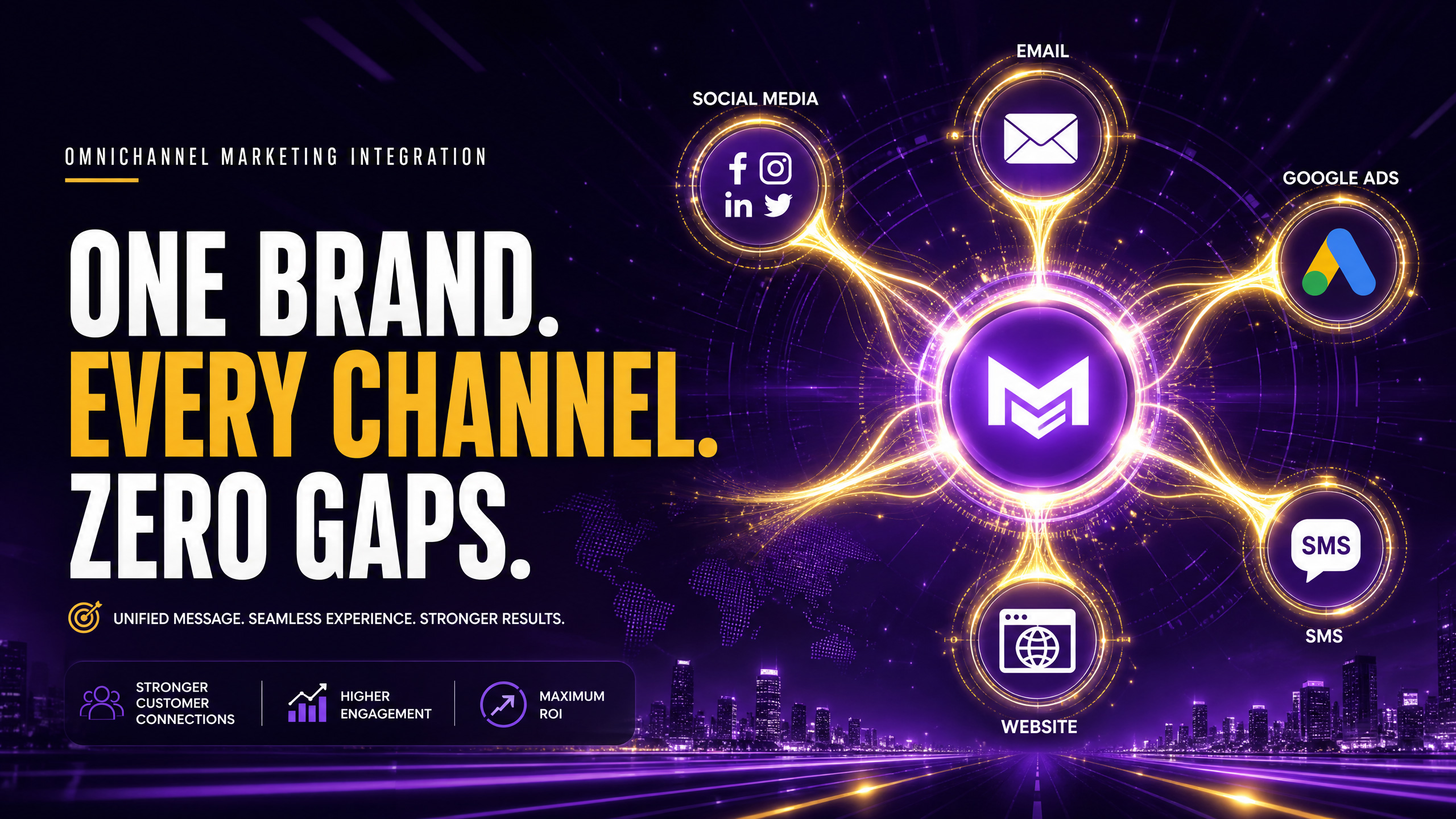
If you want to build a marketing system that multiplies the impact of every channel, you must master Omnichannel Marketing Integration.
The Silo Problem
Most businesses treat their marketing channels as separate, independent activities.
The social media team does their thing. The email team does their thing. The paid ads team does their thing.
Nobody is talking to each other. Nobody is sharing data. Nobody is ensuring that the customer experience is consistent and cohesive across every touchpoint.
The result is a fragmented brand experience that erodes trust and kills conversions.
Your customer does not experience your marketing in channels. They experience your brand as a whole. If that experience is inconsistent, they will find a competitor who feels more reliable.
Unify the Experience
Omnichannel marketing is not about being everywhere. It is about being consistent and coordinated everywhere you choose to show up.
Here is the three-step framework to integrate your marketing channels into a unified, high-converting system.
1. Create a Unified Brand Voice and Message
Every channel must speak with the same voice, use the same core message, and promise the same outcome.
If your Google Ad promises “Guaranteed Results in 30 Days,” your landing page must reinforce that promise. Your welcome email must reinforce it again. Your onboarding call must deliver on it.
The customer should feel like they are in a continuous conversation with your brand, not jumping between disconnected departments.
2. Use Data to Connect the Channels
The power of omnichannel marketing lies in data sharing.
When a prospect clicks your Facebook Ad and visits your pricing page, your email automation should know that and send them a targeted follow-up. When a customer makes their first purchase, your retargeting ads should stop showing them the acquisition offer and start showing them the upsell.
Your CRM is the central nervous system. It must capture every interaction across every channel and use that data to trigger the right message at the right time.
3. Map the Cross-Channel Customer Journey
Sit down and map out the exact path a customer takes from their first touchpoint to their final purchase, across all your channels.
Where do they first discover you? What channel do they use to research you? What triggers their final decision to buy?
When you understand the cross-channel journey, you can identify the gaps and ensure that every transition between channels is smooth, consistent, and intentional.
Compounding Marketing Power
When you master omnichannel integration, your marketing channels stop competing with each other and start amplifying each other.
A prospect who sees your Facebook Ad, then reads your blog, then gets your email, then sees your retargeting ad is far more likely to convert than a prospect who only sees one touchpoint. Each channel reinforces the others.
Imagine building a marketing system where every channel feeds into the next, creating a seamless, trust-building experience that guides your ideal customer toward an inevitable purchase. Imagine watching your overall conversion rate climb simply because you made the experience more coherent.
That is the power of omnichannel integration. It is the difference between a collection of marketing tactics and a true marketing system.