The Most Important Milestone
Getting from 10 customers to 100 is about systems and scaling. But getting from 0 to 10? That’s a different game entirely.
If you’re just starting in business, your first 10 customers are the most important you will ever have. They are not just revenue; they are validation. They prove that you have something people are actually willing to pay for. They are your first source of real-world feedback, your first testimonials, and your first case studies.
Finding them can feel like the hardest part of your journey. It feels personal, scary, and full of potential rejection.
This guide is designed to demystify that process. We will break it down into simple, actionable strategies that don’t require a big budget or a huge following. The goal isn’t just to make sales; it’s to start conversations and build the foundation of your business, one customer at a time.
Let’s find your first ten.
The Mindset Shift: You’re Not Selling, You’re Helping
Before you take a single action, we need to get your mindset right. If the word “sales” makes you cringe, you’re not alone. We often associate it with being pushy, manipulative, or annoying.
Let’s reframe it.
You created this business to solve a problem. You have a skill, a product, or a service that can genuinely help someone. Therefore, your job is not to “sell” but to find the people who need your help and offer it to them.
Every conversation is a chance to listen and learn. Every “no” is not a personal rejection but simply a signal that you’re talking to the wrong person, or perhaps haven’t explained your value clearly enough yet.
Adopt a mindset of curiosity and service. Your goal is to help. Sales is just the natural result of helping effectively.
Who is Customer Zero? Your Ideal Customer Profile
You can’t find “them” if you don’t know who “they” are. Before you reach out to anyone, take five minutes to get crystal clear on your ideal first customer.
Answer these questions:
What is the specific problem they are struggling with right now?
Example: “They are a small bakery owner who is overwhelmed by social media and doesn’t have time to post consistently.”
Where do they hang out, both online and offline?
Example: “Online in Facebook groups for small business owners, offline at local chamber of commerce meetings.”
What are their goals? What do they want to achieve?
Example: “They want to increase foot traffic and local awareness without spending hours they don’t have.”
What is their job title or role?
Example: “Owner, Founder, or Manager.”
Now, you’re not looking for “anyone.” You’re looking for a bakery owner who feels overwhelmed by social media. It’s much easier to find a specific person.
The “Low-Hanging Fruit” Strategy (Customers 1-3)]
Your first customers are often closer than you think. Start with the people who already know, like, and trust you.
Tactic 1: Your Inner Circle (The Right Way)
Don’t just blast your friends and family with a sales pitch. Approach them for help and advice.
The Script:
“Hi [Name], I’m launching a new [business/service] that helps [target customer] with [problem]. Since I’m just starting out, I’m trying to get feedback. Do you know anyone who is a [target customer] that might be willing to chat with me for 15 minutes? I’m not trying to sell anything, just want to make sure I’m on the right track.”
This approach makes them a helper, not a customer. They are more likely to connect you with the right person, and sometimes, they might even say, “Actually, I could use that!”
Tactic 2: Your Professional Network
These are your former colleagues, bosses, and connections on LinkedIn. They know your work ethic and skills.
The Action: Go through your LinkedIn connections. Identify 10-15 people who are either your ideal customer or know people who are. Send them a personalized message (not a generic blast) similar to the script above.
The “Go Where They Are” Strategy (Customers 4-7)
Now it’s time to move beyond your immediate circle and find your customers in their natural habitats.
Tactic 3: Online Communities
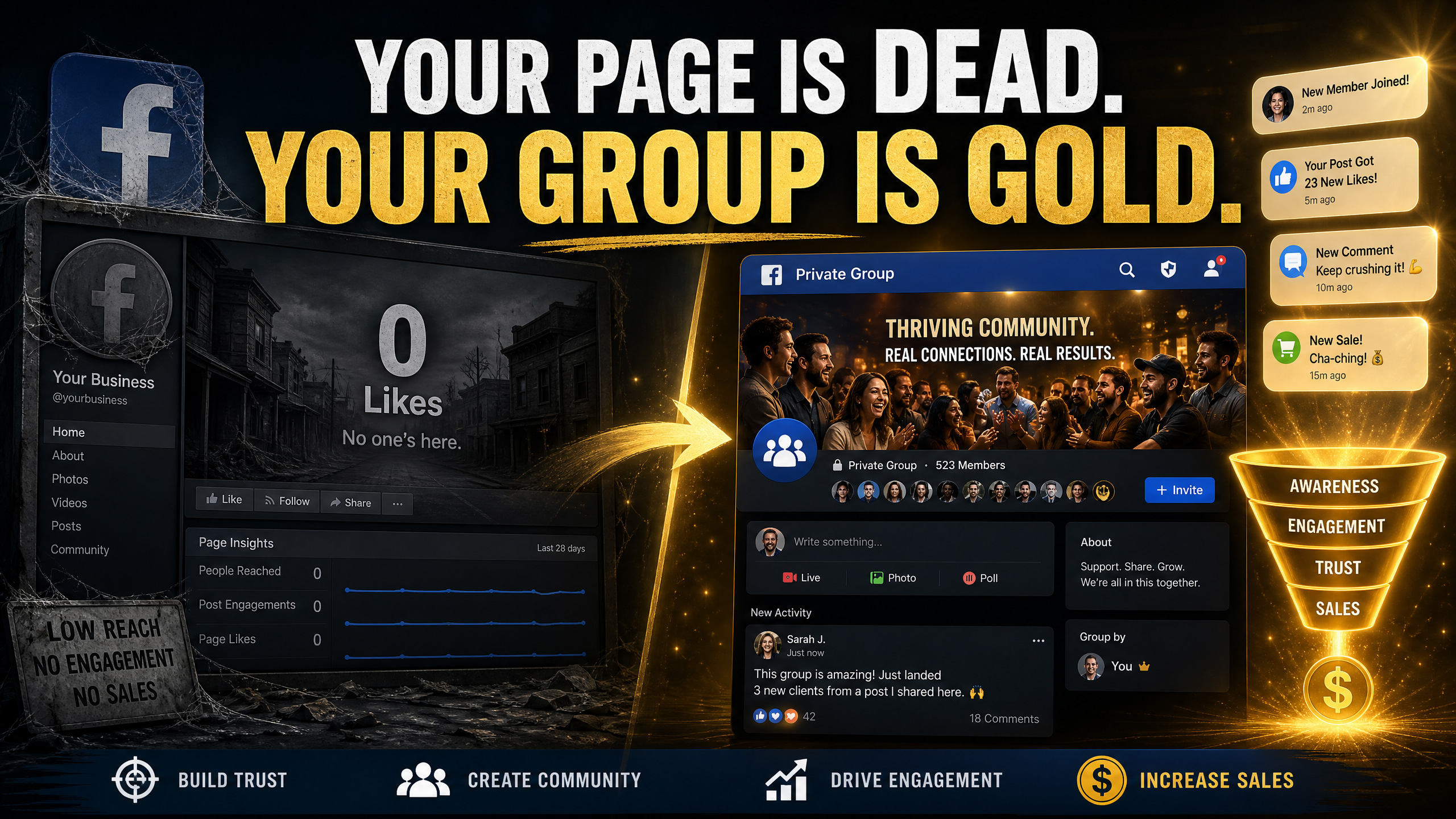
Find 2-3 Facebook groups, subreddits, Slack channels, or online forums where your ideal customer asks questions.
Your Plan (The 90/10 Rule):
90% of your time: Be genuinely helpful. Answer questions, offer advice, and share your expertise for free. Don’t mention your business. Just build a reputation as a smart, helpful person.
10% of your time: When someone posts a problem that your business directly solves, you can reply with, “This is exactly what I help people with. Feel free to send me a direct message if you’d like to chat more.” Because you’ve already provided value, this will be seen as helpful, not spammy.
Tactic 4: Local Events & Meetups
If your business serves a local area, in-person connection is unbeatable. Use sites like Meetup.com or Eventbrite to find local gatherings for your target audience (e.g., small business networking, real estate investor meetups, etc.).
Your Goal: Don’t go to sell. Go to listen. Ask people what they’re working on and what their biggest challenges are. When you find someone facing the problem you solve, simply say, “That’s interesting. I actually specialize in helping people with [that exact problem].”
The “Create Value First” Strategy (Customers 8-10)
By now, you have momentum. These strategies help attract customers to you by demonstrating your value upfront.
Tactic 5: Offer a Free “5-Minute Audit”
Announce on your social media (LinkedIn is great for this) that you are offering a limited number of free, no-strings-attached audits.
A freelance writer could offer a “5-Minute Homepage Headline Review.”
A financial advisor could offer a “5-Minute Retirement Readiness Check.”
A marketing consultant could offer a “5-Minute Instagram Bio Audit.”
This gives potential customers a quick, tangible win and a taste of what it’s like to work with you, making the transition to a paid engagement seamless.
Tactic 6: Answer Questions Publicly
Go on a site like Quora or search for relevant hashtags on social media. Find people asking questions related to your field of expertise and write thoughtful, detailed answers. At the end of your helpful answer, you can include a simple, one-line bio: “I’m [Your Name], and I help [target audience] with [problem].” This positions you as an expert and brings interested people to your profile.
Congratulations, Youve Grown Your Business
Whether you’re just starting out, or adding more customers, getting to 10 customers is a monumental achievement. You have officially moved from an “idea” to a “business.” You have proven that your concept has value in the real world.
But your work with these 10 isn’t done. They are your most valuable source of information.
Ask for feedback: Why did they buy? What could be better?
Ask for a testimonial: A quote from a happy customer is marketing gold.
Ask for a referral: Who else do they know that you could help?
Celebrate this milestone. You’ve conquered one of the toughest challenges in entrepreneurship. Now, armed with real feedback and renewed confidence, you’re ready for the next 100.