My 6 Biggest Business Lessons from 6 Decades - A Gift For You on My 61st Birthday
Hello,
On August 19th, I’ll be turning 61.
When I look back on my journey, especially my life in business, it feels like I’ve lived through several different worlds. I started in an era of landlines, Rolodexes, and handshake deals. I weathered the dot-com boom and bust, learned to market through the noise of social media, and now I’m navigating the age of AI.
Technology changes, markets shift, and trends come and go. But the fundamental truths of what it takes to build something meaningful? Those are timeless.
As I turn 61, I want to do something for small business owners. I’d like to gift you a set of AI tools I’ve created for myself, that has helped my business tremendously. I use the tools when I teach, for my clients, and for myself.
As the first gift in my “Month of Giving” birthday celebration, I want to share those truths with you. I’ve distilled six decades of experience—the wins, the failures, the “I wish I knew that sooner” moments—into the six biggest lessons I’ve learned.
These aren’t hacks or shortcuts. They are the foundational principles that have served as my compass through every storm and every success. My hope is that they can serve as a compass for you, too.
To your success,
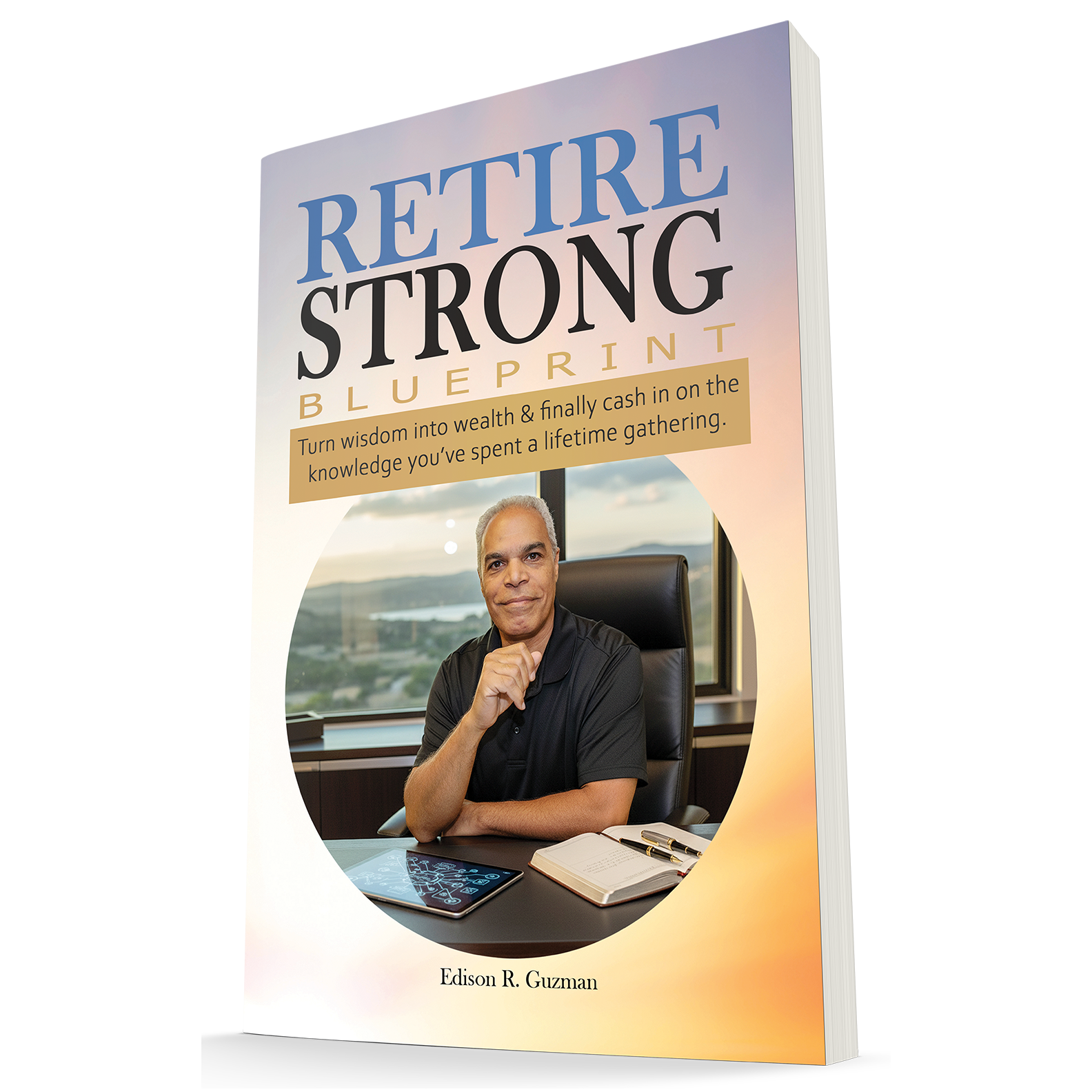
Edison R. Guzman
Lesson 1: Your Reputation is Your Most Valuable Currency.
“Your brand is what people say about you when you’re not in the room. Your reputation is whether or not they trust it.”
Long before online reviews and Google ratings, your reputation was all you had. It was the quiet nod of approval from a peer, the repeat customer who brought their friends, the supplier who extended you credit because your word was your bond.
In today’s digital world, this is more important than ever. A reputation takes a lifetime to build and only a moment to shatter. Every email you send, every product you ship, every customer you help (or fail to help) is a deposit into or a withdrawal from your reputational bank account.
Protect it fiercely. Operate with integrity, communicate with honesty, and always deliver on your promises. It’s the one asset no competitor can ever buy from you.
How to Apply This Today:
- Take 10 minutes to Google your own name and your business’s name.
- What’s the story being told? Look at the reviews, the comments, the articles.
- Identify one simple action you can take this week to improve that story (e.g., request a testimonial from a happy client, personally respond to a negative review, or write a blog post that showcases your values).
Lesson 2: Marry Your Mission, But Date Your Model.
“The vision must be non-negotiable. The path to get there must be infinitely flexible.”
I’ve seen dozens of passionate founders go down with the ship because they fell in love with their method instead of their mission. They had a great “why”—a problem they wanted to solve—but they were completely rigid about how they would solve it.
Your business model, your marketing strategy, your product features, your software stack—these are all just temporary vehicles. They are tools, not treasures. The world will change, and you must be willing to change with it.
Be stubbornly committed to your core purpose, your mission. But hold your business model loosely. Be willing to pivot, adapt, and even start over from scratch if that’s what it takes to bring your vision to life.
How to Apply This Today:
- Ask yourself: “What is the one thing about my business model that I believe is sacred and can’t be changed?”
- Now, challenge that belief. What if you had to change it? What new opportunities might emerge if you sold your service as a product, or your product as a subscription? This thought exercise builds agility.
Lesson 3: Cash Flow Isn’t Just King. It’s the Kingdom.
“Revenue is vanity, profit is sanity, but cash is reality.”
In my 30s and 40s, during the first internet boom, I saw companies with billion-dollar “valuations” that couldn’t make payroll. They were rich on paper and poor in the bank. When the market turned, they vanished.
It was a harsh but powerful lesson. You can’t pay your employees with “projected earnings” or your rent with “brand equity.” The single greatest source of stress in business is a lack of cash. The single greatest source of freedom is a healthy cash reserve.
Understand your numbers inside and out. Know your profit margins, your burn rate, and your cash conversion cycle. Build a cash cushion before you need it. A profitable business with poor cash flow will fail faster than an unprofitable business with good cash flow.
How to Apply This Today:
- Calculate your business “runway.” If all your revenue stopped today, how many months could your business survive on the cash it has in the bank?
- If that number makes you nervous, your #1 priority is to increase it—either by cutting costs or building reserves.
Lesson 4: Technology Changes. Human Nature Doesn’t.
“Marketing is not about mastering the algorithm; it’s about understanding the heart.”
I’ve gone from Yellow Pages ads to SEO, from direct mail to email marketing, from TV commercials to TikTok videos. The delivery mechanism is always evolving, but the reasons people buy are eternal.
People will always want to feel seen, heard, and understood. They want to alleviate a pain, achieve an aspiration, find belonging, or feel a sense of status. They want their problems solved and their lives made easier.
Don’t get so obsessed with the latest platform or tech trend that you forget the fundamentals of human psychology. Master empathy first. Understand the real, deep-down desire of your customer. Once you know that, you can connect with them on any medium.
How to Apply This Today:
- Look at your latest piece of marketing copy (an email, a social post, a web page).
- Is it focused on the features of your product (what it is) or the transformation it offers your customer (what it does for them)?
- Rewrite one sentence to be more focused on their feelings, fears, or desires.
Lesson 5: Your Network is Your Net Worth—But Not How You Think.
“Don’t collect contacts. Build relationships.”
Early in my career, I thought networking was about shaking as many hands and collecting as many business cards as possible. It was a game of volume. I was wrong.
A powerful network isn’t a massive database of people you barely know. It’s a small, strong circle of people you have a genuine relationship with. It’s built on giving, not taking. It’s about offering help with no expectation of immediate return, making introductions, and sharing knowledge freely.
The most valuable opportunities in my life have never come from a cold call. They’ve come from a warm introduction from someone who trusted me, and who I had invested time and energy in helping over the years.
How to Apply This Today:
- Go through your email or LinkedIn contacts.
- Find three people you haven’t spoken to in over six months.
- Send them a simple, genuine message: “Hi [Name], I was just thinking about you and wanted to say hello. How are things? Is there anything I can do to help you this week?” Don’t ask for anything. Just give.
Lesson 6: The Most Important Asset You Manage is Your Own Energy.
“Burnout is not a badge of honor. It’s a sign of a broken system.”
For decades, I subscribed to “hustle culture.” I wore exhaustion as a badge of honor. I believed that success was directly proportional to the number of hours I worked. It took me until my 50s and a painful bout of burnout to realize the truth: the best work comes from a well-rested mind.
Your focus, creativity, and resilience are not infinite resources. They are batteries that need to be recharged. You are not a machine.
Sustainable success is a marathon, not a sprint. Protect your health—your sleep, your nutrition, your mental peace—as if it’s the most critical KPI in your business. Because it is. When you are at your best, your business thrives. When you are depleted, your business suffers. It’s that simple.
How to Apply This Today:
- Look at your calendar for the next week.
- Where have you scheduled time for rest, exercise, or deep focus? If it’s not there, it’s not real.
- Block out at least two 60-minute appointments with yourself: one for “Recharge” (a walk, reading, hobby) and one for “Deep Work” (uninterrupted, focused time on your most important task).
Bonus Lesson 7: Your Expertise is Perishable. Restock it Daily.
“The moment you declare yourself an expert is the moment you begin your decline. Stay a student.”
The business degree I might have pursued in my twenties would now be a historical document. The marketing tactics that were cutting-edge in the 90s are punchlines today. The technology that powered my business in 2010 is now in a landfill.
Here is a dangerous trap I’ve seen many experienced leaders fall into, including myself: we start to believe our experience is enough. We rely on what worked, and we become comfortable in our expertise. But in a world that changes at the speed of a thumb-swipe, past success is not a guarantee of future relevance.
Your knowledge is like inventory in a warehouse; it has a shelf life. You must be constantly learning, unlearning, and relearning. You must read the books, listen to the podcasts, and—this is crucial—talk to people younger than you who see the world through a different lens. You have to be willing to experiment with the new tool, to not understand the new platform, and to feel like a beginner all over again.
The greatest competitive advantage you will ever have is your ability to learn faster than the world is changing.
How to Apply This Today:
- Schedule Your “Input”: Block just 30 minutes on your calendar three times a week. Label it “Input.” Use this time exclusively to learn something new—read an industry article, watch a tutorial on a new AI tool, or listen to a podcast episode outside your comfort zone.
- Diversify Your Mentors: Identify and follow three people on LinkedIn, Facebook or X (Twitter) who are experts in a field you know little about, with at least one of them being under the age of 30. Their perspective is your window into the future.
- Embrace “Productive Play”: Pick one new technology you’ve been hearing about (e.g., ChatGPT, a new project management app, a video editing tool). Spend 20 minutes just playing with it this week. Don’t try to master it; just explore it with curiosity.
These six lessons weren’t learned in a classroom. They were forged in the fire of experience—of projects that failed, deals that fell through, and moments of doubt, followed by breakthroughs, successes, and the quiet satisfaction of building something that lasts.
The journey of an entrepreneur is one of constant learning. My hope is that by sharing my map, your own journey might be a little clearer and a little smoother.
Thank you for letting me share a small piece of my story with you. This is just the beginning.
Edison is a lifelong entrepreneur with over 30 years of experience building, growing, and advising businesses across multiple industries. From launching an advertising firm in the 90s to navigating the world of e-commerce and digital services today, he is passionate about helping the next generation of business owners build profitable and purposeful companies.
This is only Day 1!
This guide is the first of many free gifts I’m giving away this August to celebrate my 61st birthday.
Every few days, I’ll be releasing a new tool, template, guide, or personalized audit to help you grow your business.
Don’t miss out on the next month of value!
Follow my journey and get the daily giveaways on this blog and:
I can’t wait to continue the celebration with you.