One of the biggest mistakes business owners make is trying to market to everyone.
While it may seem logical to cast the widest net possible, successful marketing works differently. The most effective marketing campaigns are built around a deep understanding of the people most likely to buy a product or service.
That’s where demographic analysis becomes invaluable.
Demographic analysis is one of the foundational building blocks of effective marketing. It helps businesses understand who their customers are, where they live, how they think, and what influences their buying decisions.
When used correctly, demographic analysis allows you to create more relevant marketing messages, choose the right advertising channels, and significantly improve your return on investment.
What Is Demographic Analysis?
Demographic analysis is the process of studying specific characteristics of a population or customer group.
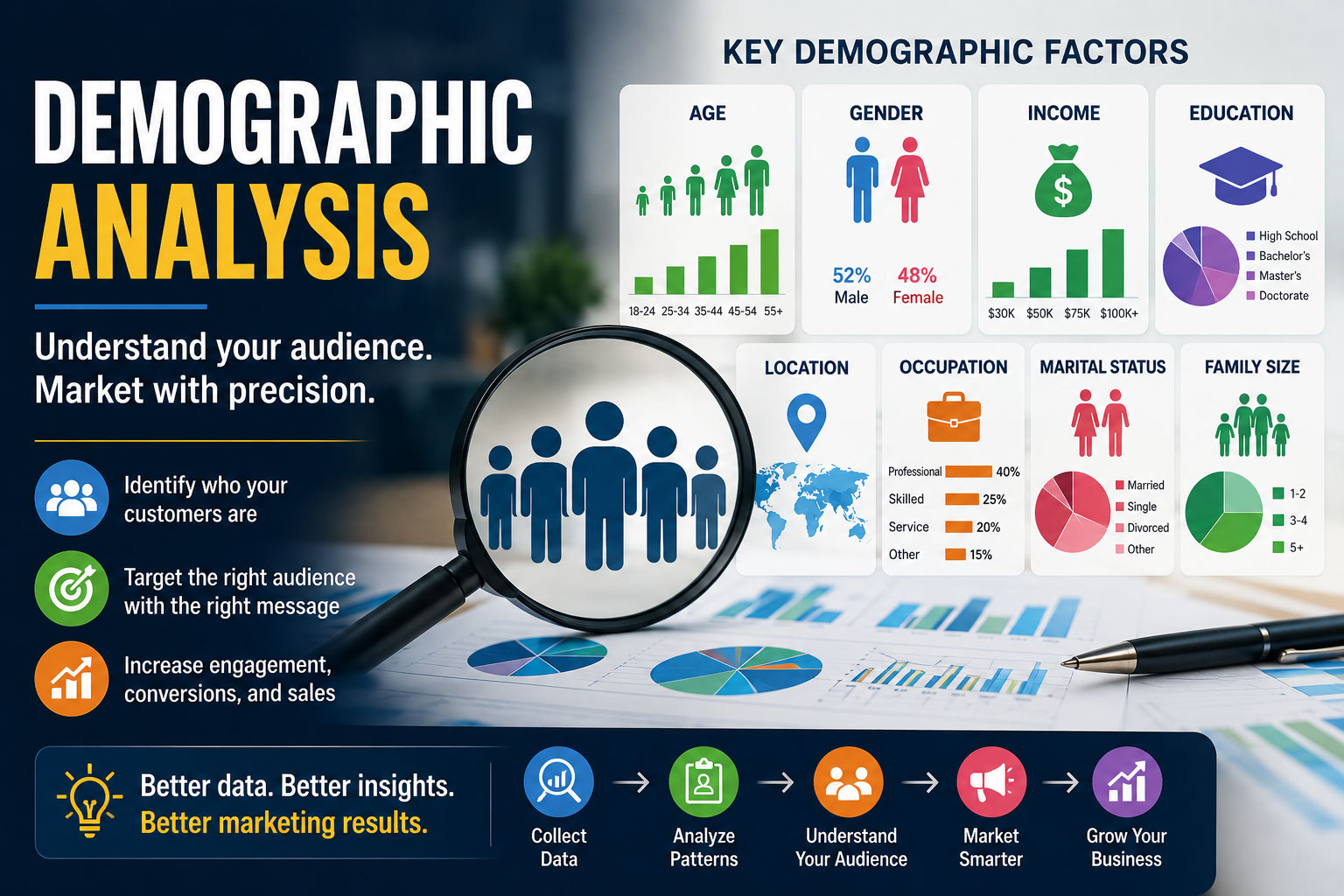
These characteristics often include:
- Age
- Gender
- Income
- Occupation
- Education
- Marital status
- Family size
- Geographic location
- Homeownership status
- Ethnic and cultural background
These factors provide valuable insights into the types of people most likely to purchase your products or services.
Think of demographic analysis as creating a detailed map of your marketplace. The more information you have, the easier it becomes to navigate your marketing decisions.
Why Demographics Matter
Different groups of people have different needs, priorities, challenges, and buying habits.
A 25-year-old first-time homebuyer will likely respond differently to a marketing message than a 65-year-old retiree.
A married couple with young children may prioritize convenience and safety, while a single entrepreneur may focus on efficiency and growth opportunities.
Understanding these differences allows businesses to tailor their marketing efforts more effectively.
Instead of speaking to everyone, you can communicate directly with the people most likely to become customers.
The Cost of Ignoring Demographics
Many marketing campaigns fail because they rely on assumptions rather than data.
Business owners often believe they know who their customers are, but when they examine actual customer data, they discover surprising patterns.
For example, a business may assume its customers are primarily younger consumers, only to discover that most sales come from individuals over age 50.
Without demographic analysis, businesses risk:
- Wasting advertising dollars
- Targeting the wrong audience
- Creating ineffective messaging
- Missing profitable market segments
- Lowering conversion rates
Good marketing begins with accurate information.
Key Demographic Categories to Evaluate
Age
Age often influences buying behavior, communication preferences, and purchasing priorities.
Different generations consume information differently and respond to different marketing messages.
Income
Income levels help determine purchasing power.
Understanding income ranges allows businesses to position products appropriately and create offers that align with customer budgets.
Geographic Location
Location affects everything from buying habits to seasonal needs.
A business serving customers in the Hudson Valley may market differently than one targeting customers in Florida or California.
Occupation and Education
Career paths and education levels often influence purchasing decisions, interests, and communication styles.
Professional audiences may respond well to data-driven messaging, while other audiences may connect more strongly with emotional storytelling.
Family Status
Whether someone is single, married, retired, or raising children can significantly impact their priorities and buying behavior.
How to Gather Demographic Information
Fortunately, demographic data is easier to obtain today than ever before.
Useful sources include:
- Customer surveys
- Website analytics
- Social media insights
- CRM systems
- Census data
- Customer interviews
- Purchase history reports
The goal is not simply to collect information but to identify meaningful patterns that can guide decision-making.
Turning Data into Action
Demographic information becomes powerful when it influences strategy.
Once you understand who your customers are, you can:
- Create more targeted advertising campaigns
- Develop stronger marketing messages
- Choose the right media channels
- Improve product offerings
- Increase conversion rates
- Reduce wasted marketing expenses
Businesses that consistently outperform competitors often possess one critical advantage: they know their customers better.
Beyond Demographics
While demographic analysis provides valuable information, it should not exist in isolation.
The most effective marketing combines demographic data with psychographic insights, including values, motivations, fears, goals, and buying triggers.
Demographics tell you who your customers are.
Psychographics help explain why they buy.
Together, they create a complete picture of your ideal customer.
Lastly
Marketing becomes dramatically more effective when it is guided by facts rather than assumptions.
Demographic analysis provides a practical framework for understanding your audience and making smarter business decisions. It helps eliminate guesswork, improve targeting, and create marketing campaigns that resonate with the right people.
The businesses that grow consistently are rarely the ones with the biggest advertising budgets. More often, they are the businesses that understand their customers at a deeper level and use that knowledge to communicate more effectively.
Before launching your next marketing campaign, take the time to analyze who your customers really are.
The answers may reveal opportunities you never knew existed.